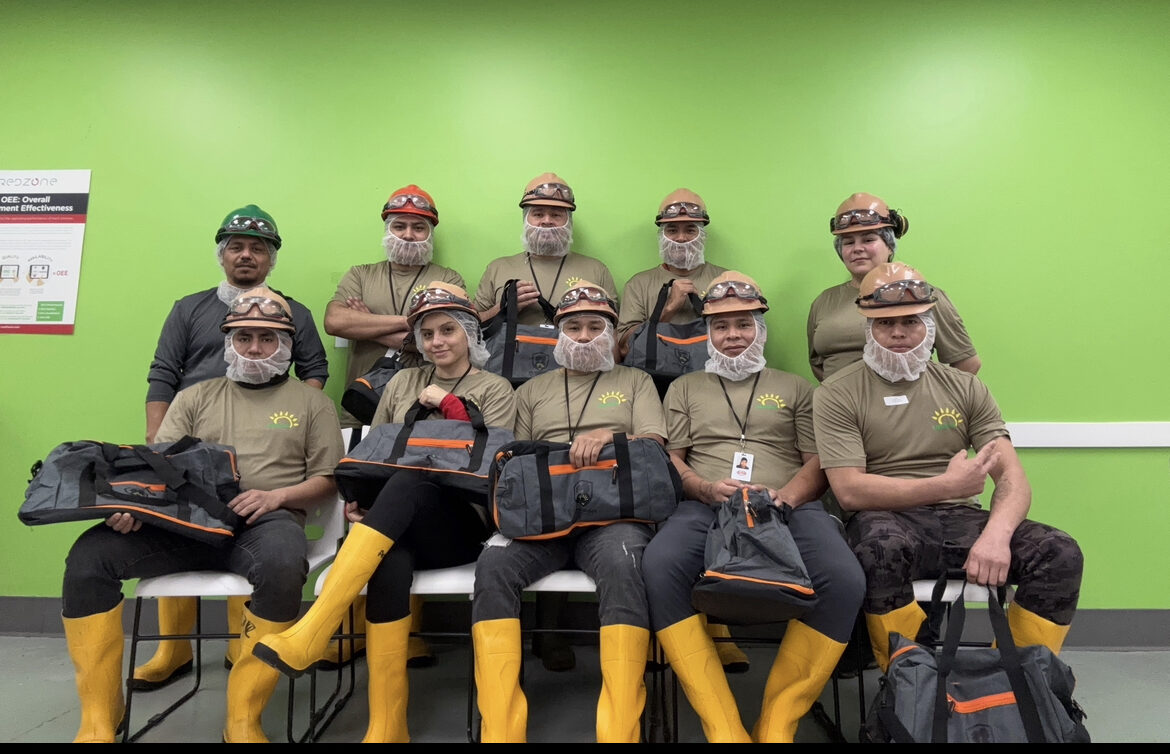
How to Reduce Turnover on Your Contract Sanitation Team
How StartKleen’s Dos Amigos mentorship program keeps new hires past the first shift, and why retention has to come before training.
TL;DR
StartKleen’s Dos Amigos mentorship program reduces contract sanitation turnover by pairing every new hire with a vetted mentor for 120 days, using structured check-ins, language-matched pairings and a selection process built around people skills rather than job performance. Since implementing the program, we have seen measurable drops in first-30-day attrition across 200+ plants in 17 states.
Explore this article with AI
Sanitation work is hard. Night shifts, physical demand, wet and noisy environments: new hires walk in on day one and a lot of them don’t come back for day two. The industry accepts this as a given. At StartKleen, we don’t.
The Dos Amigos mentorship program was built to solve the turnover problem that has plagued contract sanitation for years. It works for a simple reason: people stay where they feel comfortable.
The First 30 Days Are Everything
Most contract sanitation operations lose new employees in the first week. Food processing plants are intimidating. Equipment is loud and unfamiliar. Night shifts are disorienting. Walking into a facility where no one speaks to you and everyone seems to already know the rules is enough to send people home for good.
You walk into the break room for orientation and you’re lost. Nobody talks to you. Everybody makes their judgment on whether you’re going to make it. Dos Amigos helps with that, because you have one person assigned to you, and that person coaches you.
Jose Vargas, Area Manager, StartKleen
While rough starts may still happen at some plants, Dos Amigos has eliminated the type of behavior Jose described at StartKleen. In my experience managing plants across seven of the 17 states StartKleen operates in, the pattern is consistent: the more comfortable somebody is at work, the more likely they are to stay past that first week.
The program pairs every new hire with their own mentor on day one. The mentor shows them where the locker room is, walks them to breaks and introduces themselves in a way that feels like the beginning of a friendship.
Human Connection Retains Employees Longer Than Training Packets
New hires in contract sanitation quit because no one made them feel like they belonged, not because the job was too hard. Retention has to come before training. You can’t teach someone who already quit.
It’s not assigning a trainer to a specific job title. The biggest thing is the icebreaker, getting through that first day, because it can be kind of scary coming in at night and seeing this big crowd of people and not knowing what to think.
Jose Vargas, Area Manager, StartKleen
Dos Amigos pairs focus on human connection. A mentor’s job is to make new hires feel like they belong on the floor, not to produce the fastest cleaner. Since implementing the program, we’ve seen significant drops in turnover, particularly in the first-30-day window when attrition in physically demanding night-shift environments is highest.
Who Makes a Good Mentor
Most mentorship programs fail at selection: they pick the highest performer on the floor, not the best person to support a new hire. At StartKleen, those are rarely the same person. The best cleaner on your crew may have zero interest in slowing down to help a new hire find the bathroom.
Mentors are selected based on attitude, energy and a genuine desire to help others. They must have been with StartKleen for at least 120 days before they’re eligible. Most volunteer themselves rather than being assigned. We look for the people who come to us and say they want to share what they know, that they want to make someone feel comfortable. That’s where the best mentors come from.
We wanted people who were genuinely happy to be at work. That joy, that excitement, you wanted that to rub off on other people.
Jose Vargas, Area Manager, StartKleen
Language is also a factor. In facilities with multilingual workforces, we build mentor teams that match the language diversity on the floor. A mentor who can’t communicate with their mentee isn’t going to help anyone feel at home.
Relationships That Outlast the Formal Program
Dos Amigos relationships typically continue well past the 120-day program, and that carry-on effect is where the long-term retention impact lives.
The formal program runs 120 days, with check-ins at 30, 60, 90 and 120-day milestones. Mentors are evaluated throughout on whether their mentee feels supported, not just whether they’re doing the job on the production floor. When mentors are ready to slow down and avoid burnout, the program offers a structured retirement option: step back, return when ready.
Those bonds carry on after 120 days. It breaks down the barriers where people stay in their own area and don’t help anyone else. It builds real teamwork.
Jose Vargas, Area Manager, StartKleen
One employee was working two physically demanding jobs at once and was visibly exhausted, to the point where no one expected him to last. His mentor pulled him aside, walked him through advancement options at StartKleen that could replace income from the second job and gave him a clearer picture of his path forward. He stayed. And now he’s a mentor himself.
That progression from mentee to mentor is more common than you’d expect. In my experience, 60 to 70 percent of program graduates eventually ask to become mentors themselves.
The Business Case
Lower turnover in contract sanitation isn’t a soft HR benefit. It shows up in facility performance and client outcomes.
- 120 days Formal program length, with structured check-ins at the 30, 60, 90 and 120-day milestones.
- 60-70% Of program graduates eventually ask to become mentors themselves, according to Wade.
- 200+ Plants across 17 states where Dos Amigos pairs new hires with a mentor.
We regularly take over facilities and are able to significantly decrease labor, because a cohesive trained team is more efficient than a rotating pool of individuals who don’t work together. Clients notice. I’ve had clients watch their crews on camera and come back to me with feedback like this: “I was watching yesterday and I just happened to see your guys moving together in sequence, going through the facility, it was perfect, it was seamless, they were checking on one another. I’ve never seen that happen before.”
When mentorship is built for retention, that’s what you get: a team that functions like one. If that’s the kind of crew you want running your third shift, request a bid.
Frequently asked questions
Everything you need to know about reducing turnover with the Dos Amigos mentorship program.
How do I reduce turnover on my contract sanitation team?
Turnover in contract sanitation is most often a comfort problem, not a skills problem. Pairing every new hire with a dedicated mentor on day one, someone who handles introductions, walks them through the facility and checks in regularly, addresses the anxiety and isolation that drives early attrition. StartKleen’s Dos Amigos program uses this approach across 200+ plants in 17 states with measurable retention results.
How long does the Dos Amigos mentorship program last?
The program runs 120 days, with formal check-ins at 30, 60, 90 and 120-day milestones. Mentors and mentees are evaluated at each stage. After graduation, the relationships typically continue. Mentees regularly return to their mentors for advice well past the official end date.
What makes someone a good mentor in a contract sanitation setting?
At StartKleen, mentors are selected on people skills and attitude, not job performance. Candidates must have been with the company at least 120 days and typically volunteer for the role. StartKleen also prioritizes language diversity in mentor selection so new hires can receive support in their primary language.
What is the difference between Dos Amigos and a standard sanitation training program?
Standard training programs verify that an employee received information. Dos Amigos ensures a new hire has a human connection on the floor before anything else. You can teach someone the seven steps of sanitation, but if nobody on that floor genuinely cares whether they come back tomorrow, the knowledge passed along in the training means nothing.
About the Company
StartKleen is a founder-led, third-generation food safety business headquartered in Gunter, Texas. We provide turnkey contract sanitation, chemistry solutions and food safety training to 200+ USDA and FDA-regulated food processing facilities across the U.S. With 30+ years of combined leadership experience, 1,500+ team members and a 97% client retention rate, we deliver consistent, audit-ready sanitation backed by a culture of mentorship, accountability and pride.
Learn more at startkleen.com.
About the Author
Wade Becraft is Managing Director at StartKleen, overseeing 13 plants across seven states. He has been with StartKleen for two years and serves as a Dos Amigos Coach, the company’s peer mentorship program for new hires in food processing sanitation.
Methodology
This article reflects Wade Becraft’s experience leading StartKleen sanitation crews across seven states, along with interviews with StartKleen area managers and the company’s internal records on the Dos Amigos mentorship program. Retention figures and the mentee-to-mentor rate are drawn from StartKleen’s operational experience rather than a formal external study.