Every Card is Logged and Reviewed
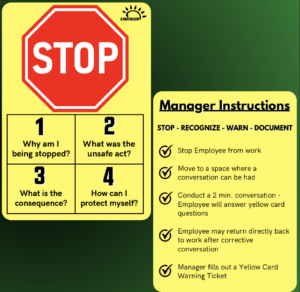
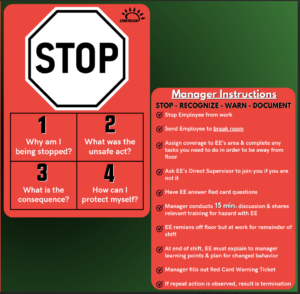
Every yellow and red card is entered into an app on the manager’s phone. The manager records the employee’s name and ID, the four answers, and submits it. StartKleen’s Safety Director receives a report from every card across every plant.
That visibility is the whole point. The Safety Director can see who is getting cards, which plants are generating them, and who the repeat offenders are. If a pattern starts to look dangerous, she can call the regional or area manager directly and have them visit the plant before the behavior turns into an injury.
Why StartKleen Built the Program
StartKleen built the red card/yellow card system because near-miss reporting was sporadic. Across more than 1,000 employees working in hazardous environments, only 11 near misses were written up in the first six months of 2024, despite years of management pushing for them. OSHA data and decades of industrial safety research show a strong correlation between near-miss reporting and reduced serious injuries. If you don’t catch the close calls, you can’t prevent the real ones.
The cards solved that. In the first month of the program, managers logged roughly 300 near-miss-style incidents through the cards. Over the next 12 months, the volume of employees grew, the total number of incidents stayed roughly flat, but the severity of injuries dropped, fewer serious recordables, more minor bumps and bruises that got handled with first aid.
Recognized Engagement That Satisfies OSHA
The red card/yellow card program satisfies OSHA’s expectation that an employer demonstrates active employee engagement on safety. The first time StartKleen presented the program at an OSHA hearing, the inspector dropped two serious violations and reduced the associated fines by roughly half, citing the program as evidence the company was working on the right things. StartKleen’s outside OSHA counsel described the program as a model worth marketing publicly.
A Coaching System
The program is explicitly framed as coaching. StartKleen’s leadership communicates to managers and employees that the cards exist because managers care more about an employee’s safety than about avoiding an uncomfortable conversation. The cards force the conversation to happen every time, the same way, with the same four questions. This allows unsafe behavior to get corrected before it turns into an injury.
The program is designed to give every employee a clear, documented chance to change. The structured conversation, the four questions, and the logged record mean unsafe behavior gets addressed in real time, and the data lets the Safety Director step in before a pattern turns into an injury.