Why Our Managers Carry Cards in Their Back Pocket Every Night
How a two-card coaching system built a safety culture where difficult conversations happen on the floor, not in HR.
TL;DR
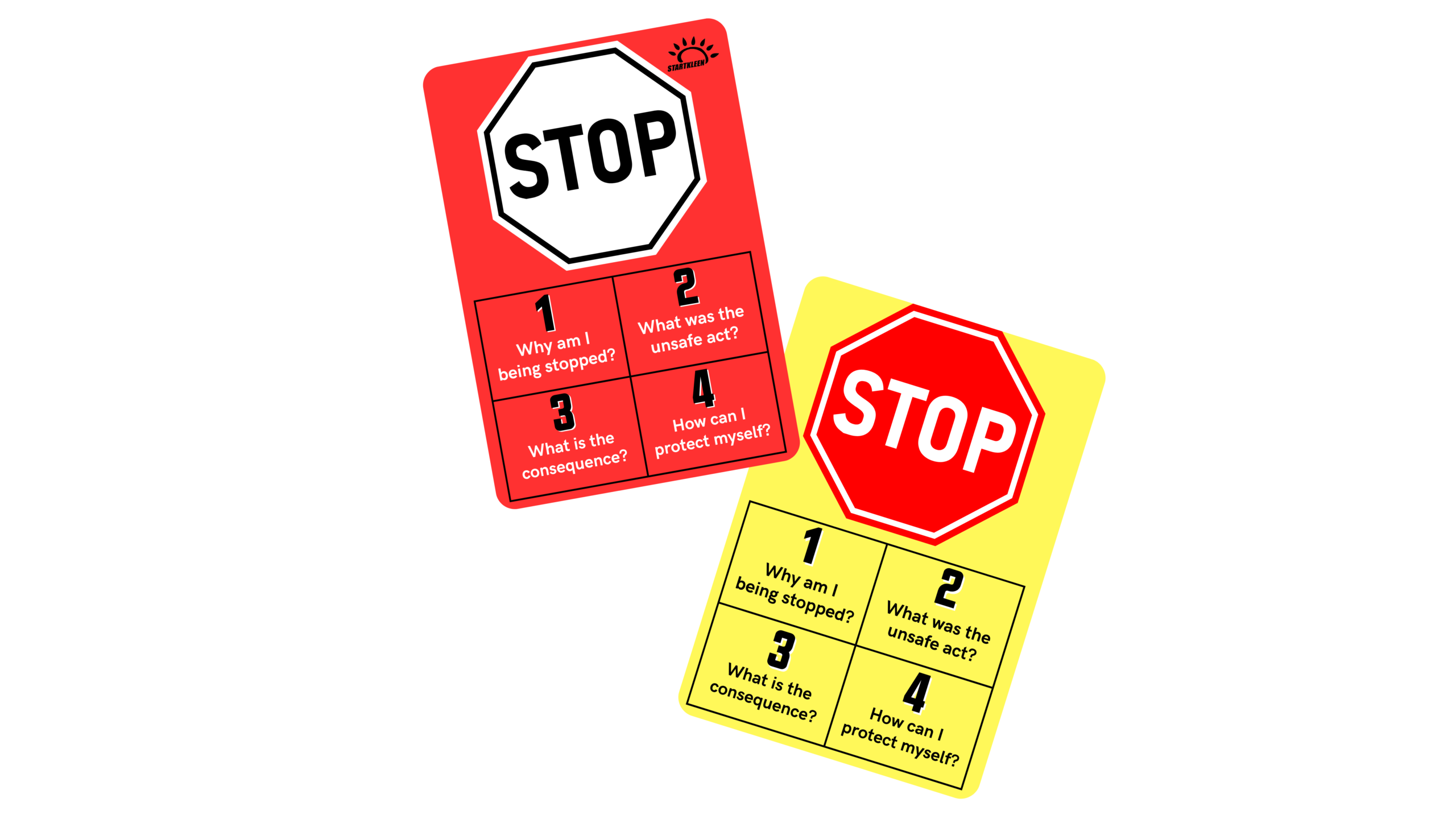
Every StartKleen manager carries physical red and yellow coaching cards every shift. A yellow card triggers a two-minute conversation; a red card triggers fifteen minutes. Both end with the employee returning to work, not HR paperwork, because the program is a coaching tool, not a discipline system.
Explore this article with AI
Every night before a StartKleen manager steps onto the plant floor, they do something small: they make sure the cards are in their back pocket.
Two plastic cards. One yellow, one red. Four questions on each. They’ve been there so long the routine is muscle memory. StartKleen is a commercial food safety and sanitation company operating across the United States, and those cards are how the company’s safety program shows up in real time, every shift, at every plant.
It Started With a Sports Analogy Nobody Had to Explain
Three years ago, StartKleen’s safety program had a near-miss reporting problem. Near-miss reports were low across our plants, and the gap between what was happening on the floor and what was being documented was wide. In facilities where crews often carpool together and family members work side by side, reporting an unsafe behavior you’ve witnessed is a more complicated act than it sounds. Those dynamics are real, and they show up in the data.
The breakthrough came from a question: what language does everybody already speak?
The Dallas Stars were in the hockey playoffs, and I started thinking about the penalty box. Hockey players get sent off the ice for rule infractions. The team plays short-handed. Everyone understands what it means. It’s consistent and nobody needs it explained to them.
From hockey, the conversation shifted to soccer. Red cards. Yellow cards. A universal language for “you’ve crossed a line” with graduated consequences. A yellow card is a warning. A red card is more serious. And even in soccer, a red card doesn’t end the player’s career. It ends the game.
“The aha moment I had was: hockey is really not a worldwide sport the same way soccer is, but we have employees from all over the world, and most of the Hispanic cultures that work for us, they all played, watched and are very aware of what’s going on in the soccer world.”
Rick Kimbrell · Founder & CEO · StartKleen
The imagery clicked because of who works for StartKleen. Across our plants, we have employees from all over the world, and in many of those cultures, soccer is a shared reference that cuts across language barriers. When we introduced the concept, people understood it immediately.
Coaching, Not Punishing
The Red Card/Yellow Card program is a coaching tool. It has never been a discipline tool.
In nearly three years of running this program across thousands of employees, StartKleen has had two terminations related to safety behavior (StartKleen internal program data, 2023–2026). Both were cases where an employee wouldn’t change behaviors that put their own safety at genuine risk.
The program is designed to catch people in the moment and help them do it right going forward.
The Harder Work: Getting People to Report
Resistance showed up early. The concerns were specific: “I don’t want to write-up my friend.” “He’s my ride home.” In facilities where crews carpool and family members share a plant, pulling a card on someone felt like a betrayal. These weren’t excuses. They were real concerns from people protecting people they cared about.
Getting past that resistance required leading with vulnerability rather than policy. When StartKleen introduced the program to its management teams, senior managers stood in front of their teams and told their own near-miss stories. Things they’d done that were unsafe. Moments they weren’t proud of. The message was direct: these conversations are normal. They happen to everyone. You are not going to lose your job for having them.
“One of the things we did when we launched it was ask some of our higher-up managers to go in and tell the managers in there about some of the near misses they’d had, some of the mistakes they’d made. Things they’d done that were totally unsafe. Trying to open up the dialogue for everyone else, to normalize the idea that it’s not something that’s going to get you in trouble.”
Reagan Williams · Safety Director · StartKleen
The reporting culture shifted. Near misses became a standard part of daily conversation, woven into onboarding, weekly meetings and daily operations. Today it would be hard to find a StartKleen employee who doesn’t know what a red card or yellow card is.
What the Cards Signal to Your Workforce
A manager carrying those cards in their pocket every night sends a signal that most safety programs don’t: this is part of the job, every shift, not just when something goes wrong. The cards are physical proof that accountability is always on.
When employees see their manager pull a card and the result is a two-minute conversation rather than a formal write-up, the signal is equally clear. This is a workplace where you can surface a safety issue without losing your job over it. In a workforce as diverse and mobile as StartKleen’s, with employees from many countries and backgrounds, that predictability matters. People need to trust that the system works the same way for everyone.
The physical card also helps managers. It gives them a structured framework to approach a difficult conversation without improvising. Four questions on a piece of plastic, and the conversation has a direction from the first word.
The Relationship Is the Program
The mechanics of the card system matter less than the relationships they’re built on. StartKleen managers are encouraged to know their employees personally: their hobbies, their families, their goals. That knowledge shapes how safety conversations land.
When a manager knows what an employee cares about most, they can connect safety directly to that person’s life. Reagan Williams, StartKleen’s Safety Director, describes the approach this way: if a manager knows an employee has a grandchild on the way and spots them working without goggles, the conversation isn’t abstract. It’s personal.
“If you know that they’ve got a grandkid on the way and they’re working without goggles, you can say: ‘Listen, you’re fixing to have this grandbaby being born, and you want to be able to see her. You want to be able to witness this. Don’t jeopardize that. Don’t forget those goggles.'”
Reagan Williams · Safety Director · StartKleen
That’s not manipulation. That’s a manager saying: I know who you are outside of this plant, and that’s exactly why I’m stopping you right now.
What This Means If You’re Considering a Career with StartKleen
How a company handles safety tells you a lot about how they handle everything else.
A company that treats safety as a punitive system, where a near miss leads to a write-up that leads to HR that leads to fear, is a company where people stop talking. Where problems go underground. Where the culture of silence builds until something serious happens.
A company that treats safety as a coaching program, where a manager pulls a card to make sure you go home the same way you came in, values the people doing the work. At StartKleen, the cards in the pocket are a signal: we’re paying attention. Not to catch mistakes, but to make sure you’re safe.
That’s the commitment those two plastic cards represent, every night, at every plant.
Frequently Asked Questions
Everything you need to know about StartKleen’s Red Card/Yellow Card safety program.
What happens when an employee receives a red card at StartKleen?
A red card means a 15-minute coaching conversation in the break room, away from the floor, with the manager and the employee’s direct supervisor present. The employee answers four questions about the unsafe behavior, receives relevant safety training and returns to work. Termination is reserved for only the most extreme cases of repeated unsafe behavior where the employee’s own safety is at genuine risk.
How does StartKleen’s safety program serve employees from multilingual or multicultural backgrounds?
The Red Card/Yellow Card program was designed with a diverse workforce in mind. The soccer card system is a widely recognized framework that doesn’t require fluency in English to understand. The four-question coaching format keeps conversations structured and consistent regardless of language background.
Is the Red Card/Yellow Card program part of employee onboarding?
Yes. The program is introduced during onboarding and reinforced throughout an employee’s time with the company, through weekly management meetings, ongoing coaching sessions and integration with other training programs. The goal is for every employee to understand the program from their first day on the floor.
Why does StartKleen use a phone app instead of traditional paperwork for safety reporting?
The app keeps the process fast, on-floor and in real time. Traditional written reports require leaving the plant floor and create the perception that the employee is being formally written up. The manager logs the conversation on their phone, hits send and the employee returns to work. The simplicity is intentional.
About the Company
StartKleen is a founder-led, third-generation food safety business headquartered in Gunter, Texas. We provide turnkey contract sanitation, chemistry solutions and food safety training to 200+ USDA and FDA-regulated food processing facilities across the U.S. With 30+ years of combined leadership experience, 1,500+ team members and a 97% client retention rate, we deliver consistent, audit-ready sanitation backed by a culture of mentorship, accountability and pride.
Learn more at startkleen.com.
About the Author
Rick Kimbrell is the Founder and CEO of StartKleen. A third-generation food safety professional, Rick founded StartKleen in 2009 building on a family legacy in sanitation that began with his father, Ray Kimbrell. With more than 30 years of leadership experience in food plant sanitation, Rick has built StartKleen into a 1,500-person team supporting 200+ USDA- and FDA-regulated food processing facilities across the United States. He is a 2026 EY Entrepreneur Of The Year Southwest finalist and a Vistage Lifetime Achievement Award recipient.
Methodology
This article reflects StartKleen’s operational experience running the Red Card/Yellow Card safety program across food processing facilities in the United States since 2023. Program outcome data cited in this post reflects StartKleen internal safety records from 2023 to 2026. Quotes from Reagan Williams, Safety Director, and Rick Kimbrell, Founder & CEO, were made in support of this article.