What It Really Takes to Remove Allergens From Your Equipment
Why allergen control is a removal problem, and how to prove the protein is gone
TL;DR
Allergens are proteins, and no chemical makes a surface safe while the protein is still present. Control means breaking those proteins down, physically removing them, then proving the result through testing. Passing the audit is the minimum; protecting consumers is the goal.
Explore this article with AI
After fifteen years in food manufacturing as an FSQA Coordinator, Supervisor and Manager, and another decade conducting BRC and SQF audits across hundreds of facilities, I’ve learned to be clear about one thing: no chemical can make a surface allergen-safe on its own. Allergen control is a removal problem. You can’t dose your way out of it.
The protein has to physically leave the surface
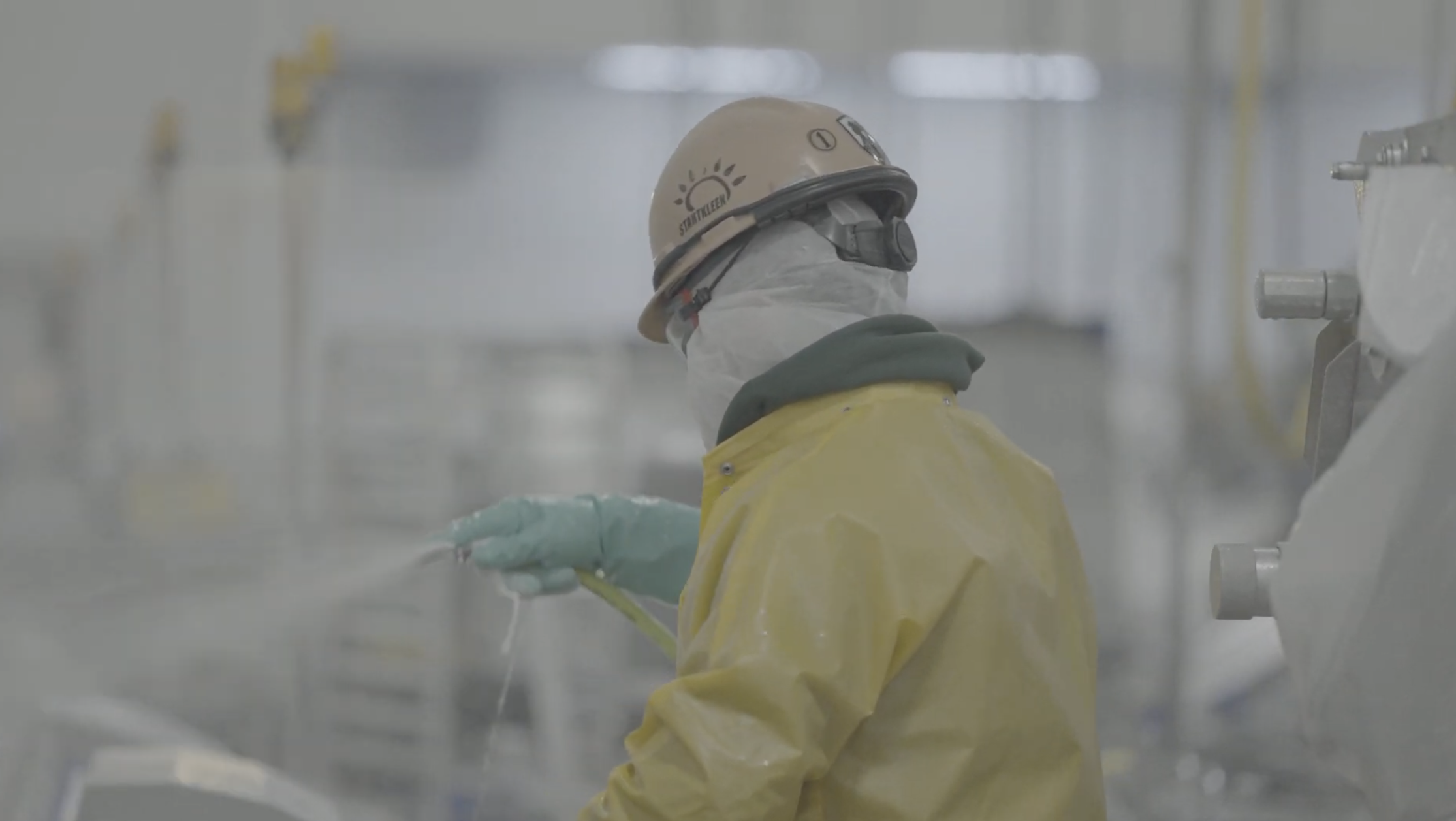
Allergens are proteins. Unlike fats, which you can break down and lift with a caustic cleaner, an allergenic protein does not stop being a hazard just because you have hit it with chemistry. No compound makes a surface safe while the protein is still present. The protein chains must be broken down, then physically removed from the surface through flushing, rinsing and deliberate manual cleaning.
That matters because of how sensitive consumers are. Some people react to trace portions of a protein chain that a fat or soil-based cleaning standard would never flag. “Looks clean” and “tested low for organic soil” are not the same as “allergen-free.” The sanitation process shall address the protein specifically, then the surface evaluated through testing to prove it is no longer present.
This is also why a surface can pass a visual inspection and an organic-soil test and still carry enough allergen to trigger a reaction. The protein does not have to be visible, or even abundant, to put a sensitive consumer at risk.
Proving it: how allergen testing actually works on the floor
Validation is where a lot of programs get fuzzy, so here’s how it works on the floor. Allergen verification swabs are handled much like ATP (adenosine triphosphate) swabs. You swab a defined section of the product-contact surface, in most cases a two-by-two or four-by-four area, in two directions, then run the swab through a solution which provides a result within five to 30 minutes as to whether or not allergens remain on the surface.
Several manufacturers make reliable kits, including Neogen, Hygiena and AllerSnap, and many are specific to substances like soy, milk, egg and seafood. The rule is simple: if the test identifies protein, the surface is contaminated, full stop. The aforementioned kits provide readings which are pass/fail. Lateral flow devices may be used and also provide a pass/fail result; however, those devices typically are more sensitive to the specific allergenic protein present. Both methods, swab and lateral flow, provide a quick result and a laboratory is not necessary.
When a pre-operational swab comes back positive, there’s no debate and no shortcut. The equipment is cleaned again and re-swabbed as necessary until an acceptable result is obtained. Re-cleaning a contaminated line costs time. Shipping an undeclared allergen may be far more costly.
Cleaning is four things working together
Effective cleaning rests on four parts, and they work as a system, not a menu:
- Time: enough contact time for the chemistry to act on the protein.
- Temperature: water warm enough to support the process.
- Physical action: the scrubbing and mechanical work that lifts protein off the surface.
- Chemistry: the right product for the soil and the surface.
Miss any one of them, whether it’s water that’s too cold, too little contact time, the wrong chemistry or skipped scrubbing, and the whole result falls apart. I’ve seen plants with excellent chemistry receive poor outcomes because each of the four parts of sanitation were either rushed and/or missed.
Chemistry gets the credit, but it is the physical action that does the work. If your crew skips the scrubbing or shortcuts the contact time, no chemical on the shelf is going to save that surface.
Jason Holcombe, VP of Relationships, StartKleen
Your standard sanitation team can and should run allergen cleaning, but it needs extra weight on two fronts: the physical work and product selection. Oxidative compounds with good detergency improve the rinse, but they don’t replace the scrubbing. Dry operations like spice handling demand even more hand scrubbing and mechanical action, because there is often no visible residue to tell the crew something is present. Allergens are usually invisible, and that’s exactly what makes them dangerous.
Segregation is the other non-negotiable. Use disposable scrub heads or color-coded, allergen-specific utensils so you are not carrying protein from an allergen line to a clean line on the same brush. Cross-contamination between lines is one of the easiest failures to prevent and one of the most expensive to miss.
Niche points are where programs fail
The hardest part of allergen sanitation is not the open, flat surfaces visible, but the niche points, or flat-to-flat surfaces, inside pumps, filters and screen augers where protein hides and a spray-and-rinse cycle never reaches. Cleaning these takes precise disassembly. In the bacterial world, those spaces are known as harborage areas, and for allergens, the same discipline is applied; take the equipment apart, clean the points that matter and treat full environmental cleaning as part of the job.
The allergen you cannot remove is the one that poses the greatest risk. Anybody can wipe down a flat surface. The programs that actually hold up are the ones willing to pull the pump apart and clean the spots nobody wants to reach.
Jason Holcombe, VP of Relationships, StartKleen
This is also why sanitary design pays for itself. When a building or a piece of equipment is designed to support cleaning, meaning accessible, drainable and easy to break down, your team can actually do the work required. USDA facilities handling meat and poultry are often built to higher cleanliness and refrigeration standards for pathogen control, and that same design thinking serves allergen programs well no matter which agency governs your plant.
Train for it, and keep training
BRC and SQF both require at least annual training on your allergen program. Annual is a minimum, not a target. The strongest programs I’ve audited train more often, some quarterly, covering the major U.S. allergens, color coding and the facility’s specific handling procedures. Training has to reach the people doing the actual work, not just the QA office, because a sanitation operator on the night shift makes more allergen-relevant decisions in an hour than a manager makes in a week.
The fundamentals of allergen sanitation have stayed remarkably consistent over my career. The most notable shift has been the regulatory list growing from the “Big Eight” to the “Big Nine” with the addition of sesame. The science of removal hasn’t changed. What changes is whether your people are on it; that only happens when training is frequent, hands-on and tied to the equipment they clean every shift.
What this means for your program
Allergen control comes down to mindset. The job is to physically remove a protein and then verify it’s gone. Get the four parts of cleaning working together, respect the niche points, segregate your tools and keep your team trained. None of these steps are exotic, and that’s the point; allergen failures rarely come from not knowing what to do. They come from a skipped scrubbing step, a missed niche point or a swab nobody re-ran.
Programs that endure audit scrutiny are the ones that turn those basics into habit: a written procedure for every line, a swab schedule nobody negotiates, and a record that shows exactly what was cleaned, when and by whom. That documentation is what proves the work to an inspector and, more importantly, catches any potential contamination before it reaches a finished product. Do the basics consistently, document them every time, and protect the person who trusts your label.
Frequently Asked Questions
The questions plant teams ask most about allergen verification.
Which allergens fall under FDA jurisdiction?
The FDA oversees most of the food supply, including dairy, juices, nuts, salads, vegetables and eggs. For facilities under FDA authority, allergen verification usually centers on the plant’s own pre-operational swabbing and the documented results that prove product-contact surfaces are clean before a run begins.
How is USDA oversight different?
The USDA regulates meat and poultry. USDA inspectors hold the facility to standards based on visual pre-operational inspections, which can happen as often as the inspector chooses. The plant still performs the necessary swabbing. USDA facilities are also often built to higher cleanliness and refrigeration standards, and that design discipline supports stronger allergen programs too.
How does StartKleen train for allergens?
Management treats training as ongoing rather than a once-a-year box to check. The programs cover the nine major U.S. allergens, color coding, utensil segregation and the facility’s specific handling and disassembly procedures, with an emphasis on the physical cleaning and niche-point work where most programs fail. Because allergens are often invisible, crews are trained to follow the procedure, not the look of a surface.
What is an acceptable allergen swab result?
Swabs and lateral flow devices provide pass/fail results. Any positive result for protein means the surface is contaminated. Another form of testing, ELISA, requires the sample analyzed by a laboratory and may provide results in parts per million (ppm) instead of pass/fail. Currently, wheat is the only allergen with a regulatory limit if declaring a product gluten-free. Confirm which threshold your standard and customers require and document the result every time.
What happens if a surface fails an allergen test?
There’s no shortcut. When a pre-operational swab comes back positive, the equipment is pulled back, cleaned again and re-swabbed before it’s cleared to run. Releasing a line on a “close enough” reading is how undeclared allergens reach the consumer, so the line stays down until the swab is clean.
Which allergens does an allergen program need to cover?
U.S. programs now address the “Big Nine”: milk, eggs, fish, crustacean shellfish, tree nuts, peanuts, wheat, soybeans and sesame, which was added in recent years. Strong programs build their color coding, segregation and verification procedures around every allergen the facility actually handles.
About the Author
Sharron Scott is the FSQA Manager at StartKleen, a contract sanitation company serving food processing facilities across the United States. She has spent 25 years in food safety and quality assurance, including fifteen years in food manufacturing as an FSQA Coordinator, Supervisor and Manager, and a decade conducting BRC and SQF audits across hundreds of facilities.
Connect with Sharron on LinkedIn.
Methodology
This post reflects Sharron Scott’s professional experience across 25 years in food safety and quality assurance, including fifteen years in plant-side FSQA roles and a decade auditing food processing facilities against the BRC and SQF standards.
Technical details on swab and lateral flow testing, ELISA laboratory analysis and cleaning validation reflect standard industry practice as applied in the facilities StartKleen services. Regulatory references were verified against current FDA and USDA jurisdictional guidance.
Sources & Further Reading
- U.S. Food and Drug Administration, “Food Allergies” (fda.gov)
- FASTER Act of 2021, which added sesame as the ninth major U.S. food allergen
- FDA guidance on gluten-free labeling, the one allergen claim with a defined regulatory threshold
- BRCGS Global Standard for Food Safety (brcgs.com)
- SQF Food Safety Code, Safe Quality Food Institute (sqfi.com)
About The Company
StartKleen is a founder-led, third-generation food safety business headquartered in Gunter, Texas. We provide turnkey contract sanitation, chemistry solutions and food safety training to 200+ USDA and FDA-regulated food processing facilities across the U.S. With 30+ years of combined leadership experience, 1,500+ team members and a 97% client retention rate, we deliver consistent, audit-ready sanitation backed by a culture of mentorship, accountability and pride.
Learn more at startkleen.com